From French Horn to Happiness Science
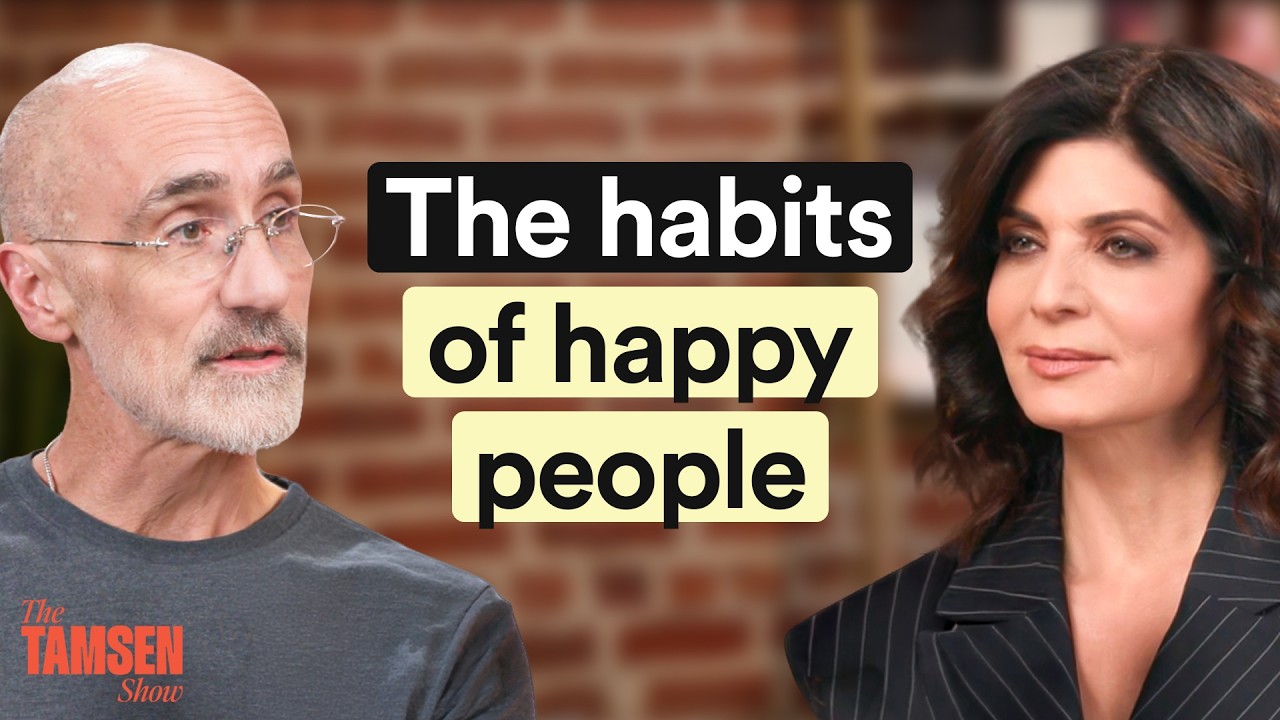
Tamsen: You haven’t always talked about happiness, right?
Arthur: No, on the contrary. I’m a behavioral scientist by background, but I dedicated myself to the study of happiness when I needed to make a transition myself. I started off as a classical musician — a professional French horn player all the way through my twenties. I played in the Barcelona orchestra.
In my late twenties, I realized I needed to do something else to support my family. I went to college by correspondence and became fascinated by behavioral science. I did that as an academic for ten years, then left to run a company for ten years. I kind of go in these ten-year increments professionally.
The hardest one came in my mid-fifties when it was time to step back from a CEO job. I was really lost. I didn’t know if I could be happy giving up something so prestigious. So I started studying people who had made incredible transitions later in life and actually gotten happier — what they all had in common. That became From Strength to Strength.
The Second Curve
Arthur: As we get older, particularly through our forties and fifties, there’s lots of neurobiological changes. People move from one kind of general intelligence to another. When you’re younger — in your twenties and thirties — you’re good at cracking the case. That’s called fluid intelligence.
But as you get into your forties and fifties, you find you’re a much better teacher. That’s called crystallized intelligence — pattern recognition, the ability to explain intricate topics to people. It was calling to you. It was time to become the professor inside you, to become a teacher.
Tamsen: From Strength to Strength gave me permission to leave a thirty-year journalism career. When people ask how I reinvented, I tell them I read this book.
Arthur: Of course it’s scary — you’re leaving things behind. There’s a period we call liminal space. That’s just a fancy way of saying the time between the things. The “now what?” time. You feel like a lobster that’s molting — soft, precarious, vulnerable. But that’s when you actually have your most growth.
The Meaning Crisis
Arthur: The number one predictor of depression and anxiety is the inability to articulate the meaning of your own life. This is a new problem. People weren’t even thinking about this in the 1960s or ’70s.
Your grandparents — if you’d said “Grandma, what’s the meaning of life?” she’d have said, “What are you talking about?” But she had a really good understanding of what the meaning of her life was.
Tamsen: Were we better able to articulate it before?
Arthur: We were better able to understand it. What’s happened is our brains are hemispherically lateralized — the two halves do different things. The right side is dedicated to mystery and meaning, love, happiness — the why questions. The left side handles technical tasks — the what and how to.
Modern life is shoving us into the left side. The more time you spend online, with devices and screens, the less likely you are to even consider questions of love, happiness, mystery, and meaning.
Six Pillars of Meaning
1. Ask Big, Unanswerable Questions
The essence of true humanity is not answering questions — that’s why AI is not human, that’s why Google’s not human. It’s asking questions.
Koko the gorilla learned a thousand words in sign language. But she never asked a single question. The asking — that’s what makes us who we are.
So start asking deep questions that don’t have answers. Why are you alive? Who created you and for what reason? For what would you give your life right now? Why do you love your husband?
Almost anything you say trivializes it. It doesn’t feel big enough. And that’s the point — these are questions you live, not solve.
When you’re having a dinner party: “Tonight we’re going to go deep or we’re going to go home.” By fifteen minutes in, the topic is: What are you most afraid of? That’s life. Otherwise you’re talking about the weather and junior’s sailing lessons.
2. Fall in Love
Romantic love is the most unsolvable, complex thing you have to live. The more you try to solve it with technology, the further away you get.
Here’s the neurobiology: there’s a neuropeptide called oxytocin — the love molecule. Women have three times as much as men. One of the best ways to get oxytocin is direct eye contact with the person you love.
You can almost save a marriage by making eye contact when you talk.
Guys don’t know this. She needs direct eye contact whenever you’re talking. She’ll stray from you emotionally because you’re not looking at her in the eyes and she’s not getting oxytocin and she doesn’t know what’s wrong.
Men need touch more — because of vasopressin, the defense-and-loyalty neuropeptide. When you’re walking down the street and you hook your arm into his — he’s the king.
My recommendations for every couple:
- More eye contact, more touch. ABT — always be touching.
- Before bed, go ten minutes early. Read to each other — love poetry, the Psalms, anything lovely.
- For the last five minutes, look at each other in the eyes while holding hands.
3. Embrace Suffering
My students sometimes ask, “Do I need to go looking for suffering?” I say: don’t worry, it’ll find you.
Every eighteen months on average you have a big transition. Every five years, something that feels pretty catastrophic. These things happen with regularity. The question is: will you be ready?
I make my students say: “My suffering is sacred. My suffering is my teacher. Today is going to have beautiful things — I’m grateful. It’s also going to have difficult things — and I’m grateful for that too, because through it I’ll learn and grow. Bring it on.”
If you’re not sad and anxious sometimes, you need therapy. Sadness and anxiety aren’t evidence something’s wrong with you — they’re evidence you’re human.
4. Transcendence
All transcendent experiences — spiritual, religious, even serving others — excite the right hemisphere because you’re getting away from yourself. This intense focus on me, me, me is so boring. Mother Nature puts us into intense self-scrutiny, but she doesn’t care if we’re happy. She just wants us to survive and pass down our genes.
The two best ways to transcend yourself: looking upward in awe, or looking outward to serve others. I recommend everyone get serious about a spiritual or philosophical practice.
When you’re in your twenties: “You taught me in Sunday school there was a good God, but I see starving children. I don’t buy it.” By your forties: “Yeah, there’s a lot that doesn’t make sense. Maybe I’m not the smartest person in the world. Maybe not everything has to make sense for me.”
5. Find Your Calling
Your calling isn’t necessarily your job. My MBA students at Harvard come in with nine job offers. I say: “Imagine yourself five years from now, 25% happier. What are the top three differences?” Numbers one and two are always about love and relationships. Number three is career.
Then I ask: “What are you spending all your time on?” They say: “Number three.”
Don’t let the world tell you what your calling is. Don’t be propagandized into career tracks you might not like. If you want to have children and take a few years off — it’s not just okay, it’s obligatory to consider.
My wife tells engaged couples: “Listen up, ladies — no matter what you do, you’re going to feel like a loser.” If you stop working to raise kids, people say you’re wasting your education. If you keep working, they say you’re a terrible mother. So figure it out for yourself.
6. Experience Real Beauty
The average child today spends between four and seven minutes a day in nature and between four and seven hours behind a screen. That’s exactly backwards.
Beauty can’t be simulated. You’ll lower the meaning you feel on vacation by 16% by taking pictures. You’re turning a right-brain experience of beauty into a left-brain simulation. You’re turning your experience into a simulation so someone else — maybe you in two years — can enjoy it.
I recommend: one person is assigned to take pictures each day. Everyone else puts their phone away completely.
Three kinds of beauty: artistic beauty, natural beauty, and moral beauty — seeing people doing beautiful things for others. Reading the biography of Mother Teresa. Seeing acts of heroism. These will give you a true sense of the meaning of your life.
Three Rules to a Happy Marriage
One: Rule out the alternatives. Slap on the handcuffs. It’s us forever — I don’t care what kind of crisis we go through. Couples who go in saying “hope it works out” are already undermining themselves. Total commitment.
Two: Stay positive. Your spouse trusts you, so they bring home all their garbage. They don’t show it to anyone else. The problem is when only garbage comes home. You have to bring home the beautiful things first. Lead with beauty before you say, “And here’s my garbage, sweetheart.”
Also: disregard negative feelings in your spouse a little more. If every time she’s bummed out you’re bummed out, you’ll spiral. Happy couples don’t care too much if their partner’s in a bad mood. “She’ll be all right.”
Three: Grow in spirit together. Couples who pray or meditate together fuse their right hemispheres. It’s like those old nuclear subs — you need two keys to launch. His key and her key. That transcendent experience together is the cure for loneliness.
On Loneliness in Relationships
Arthur: Women feel lonely in relationships when the deep human connection has been attenuated. It’s normal for periods — when I was building my business, my wife felt lonely. When our kids were first born, I felt lonely. She was all about the babies and I was the unloved fourth child.
The problem is when it goes on and on with no specific reason. The cure is right-hemisphere fusion — doing the most intimate things together. For religious couples, pray together. If you’re not religious, meditate together.
With kids: remember it’s you against them. It’s team parents and team kids. “Yeah baby, it’s you and me. I don’t think they’re going to win today.”
Real Friends vs. Deal Friends
Arthur: Take out a piece of paper. Write down the ten people you spend the most time with. Now mark them R or D — Real or Deal. For lonely people who are around others all day, it’s all D’s. Or worse — all V’s: virtual.
Real friends are the useless people. They don’t need you — they just love you.
Sixty percent of men my age say their best friend is their wife. Only thirty percent of their wives say their best friend is their husband. Those numbers don’t add up very well.
This is one reason men tend to die quickly after their wives die — they’ve lost their only friend. They’re profoundly alone and there’s no more reason to live if you’re truly alone.
Tamsen: My dad is eighty-five. He lost two wives. But he goes to pottery class, has a men’s group, sees my nephew. He did the work.
Arthur: And many guys don’t know that. Hard-charging strivers — they’re not human beings, they’re human doings. Human doings don’t have enough room for love in their hearts.
The Through Line
Arthur: Happiness really is love. And love isn’t a feeling — it’s to will the good of someone else. That is the most profound experience of life.
If you truly love, you will find meaning. If you truly love, you can go from any part of your life to any other part. If that’s the part you need to repair, then that’s the thing to get after right now — your relationships. It’s true love.
Tamsen: Arthur, thank you. I could sit here with you for hours.
Arthur: You’re bringing a lot of good to all of us through what you’ve experienced and what you’re bringing. I can’t wait to see what you’ll do over the next five, ten, and twenty years.