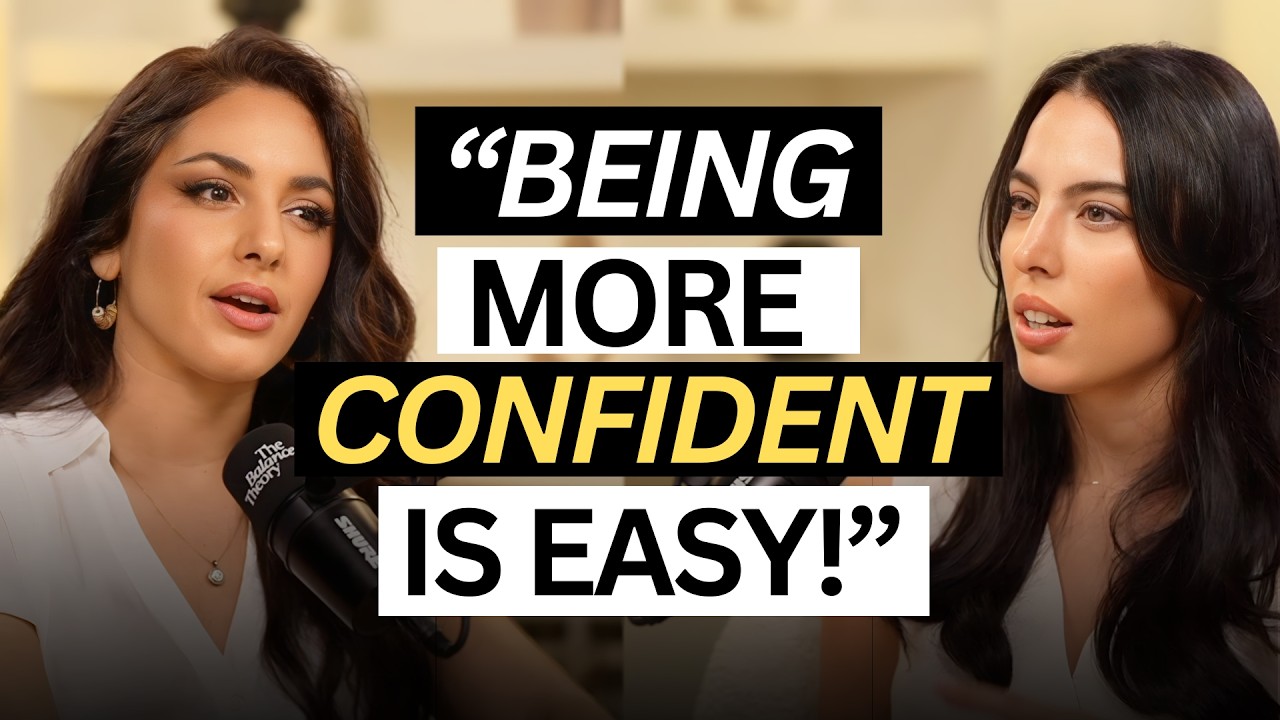
From Law School Dropout to Behavioral Researcher
Erica: Maybe it’d be useful to start with what’s been your path?
Shadé: I’ve always loved people — I was a massive people watcher. I’d go to a cafe by myself, order a coffee, and just watch people. Little creepy, so wear glasses if you’re ever going to do that so people can’t see you’re looking at them.
[laughter]
I studied psychology and law. Law was never the right fit. In my very first tutorial, people were throwing out legal jargon that sounded like a different language. When we went around one by one to introduce ourselves, I was so full of doubt I couldn’t get my voice out. My heart was beating.
I actually went to drop it after my very first class. The careers adviser just lowered her reading glasses, turned around, grabbed the course withdrawal form, and gave it to me. Didn’t even say a word. And then I had this very interesting internal voice that said: You need to prove to yourself that you can do this.
I worked in a law firm afterward — hiding behind my cubicle so people wouldn’t give me tasks, convinced I’d mess them up. I spent so much time in the legal filing cabinet because it was my safe space.
Then I shifted to banking and finance, thinking I could leave the self-doubt behind. That’s not how self-doubt works. It came right along with me.
The Pivotal Moment
A mentor named Mel changed everything. I told her I didn’t belong — I couldn’t do financial modeling, didn’t understand the terms. She looked at me and said:
“Shadé, why are you focusing on everything you don’t know how to do? You can learn these things. Why don’t you focus on what you can do — bring your strengths, lead with those — and everything else will fall into place.”
That fundamentally changed my trajectory. I stopped fixating on what I couldn’t do and started leading with my relationship skills.
Self-Doubt vs. Intuition: How to Tell the Difference
Here’s the question everyone asks: How do I know if doubt is just a growth response or a signal I’m in the wrong place?
Think of it like this: If you didn’t have the feelings you currently have, would you still want to do it?
If I hadn’t felt like an impostor, would I still have wanted to work in the law firm? No. That’s misalignment of values.
But if the answer is yes, I’d still want this — then what you’re experiencing is just a sign you’re growing and stretching. When you’re in that discomfort, neurotropic factors in the brain are being activated. These are proteins responsible for learning. We actually don’t learn unless we’re experiencing discomfort.
Your Thoughts Are Not the Problem
The self-doubt thoughts themselves aren’t the issue. The problem is how you let them make you feel and how you allow them to influence your behavior.
Cognitive diffusion is the practice of separating yourself from your thoughts. Instead of “I’m a failure,” you pause and say: “I am noticing a thought that I’m a failure.”
You go from internalizing to observing. It works with emotions too — instead of “I am anxious” (which sounds fixed and permanent), try “I’m feeling a lot of anxiety” or “I’m carrying a lot of frustration.”
What is a belief? Simply a repeated pattern of thought that’s occurred so many times it becomes a default. Just like beliefs can be written in the first place, we can overwrite them with new, healthier beliefs — starting with new, healthier thoughts.
The Four Trainable Attributes
For a long time, people thought you cannot change who you are. Decades of research confirmed personality is stable. But there’s a big but — it all depends on whether you choose to change. In the last five years, studies have demonstrated you can change your personality, but you have to target it with an intervention.
When four personality traits combine, they create your core self-evaluation — how you see yourself:
- Self-esteem → trained through Acceptance (how valuable and worthy you feel)
- Self-efficacy → trained through Agency (how capable you believe yourself to be)
- Locus of control → trained through Autonomy (focus on what you can vs. can’t control)
- Emotional stability → trained through Adaptability (managing your emotions)
The Doubt Profiles
Based on these four attributes, we can determine how doubt shows up in behavior. The most common profile among high performers:
The Anxious Overachiever
- Low acceptance: People-pleasing, seeking external validation, attaching identity to outcomes
- Mid agency: Believes in skills unless someone challenges their credibility
- High autonomy: Focuses on what they can control — sometimes taking responsibility for things outside their control
- Low adaptability: An undercurrent of anxiety that drives the people-pleasing, the overthinking, the never-ending to-do list
Practical Tools by Attribute
For Low Acceptance
1. The Intentional Delay
If you compulsively say yes before you’ve thought about it — stop. When asked for something, respond with: “Thank you for thinking of me. Can you send me an email and I’ll check with my schedule?” You’re creating space between stimulus and response.
2. Switch Apology to Appreciation
Instead of “I’m so sorry I’m late” (which magnifies a deficiency), say: “Thank you so much for your patience.” Instead of lowering your status, you’re acknowledging a positive quality in the other person.
3. Rewrite Your Labels
Instead of “I can be really intense” — say “I’m really passionate about what I do.” Same behavior, completely different self-image. Whatever comes after “I am” becomes a label you internalize and identify with.
For Low Agency
Your brain operates like a YouTube algorithm. One negative thought triggers more. These are called ANTs — automatic negative thoughts. One appears, and then you’re flooded.
Combat “I don’t know how to do this” with “but I do know how to do that.” Identify your essence qualities — curiosity, creative problem-solving, asking questions nobody else asks — and remind yourself you can apply them here.
The Silver vs. Bronze Effect: Olympic silver medalists are actually less happy than bronze medalists. Silver thinks “I almost won” (upward counterfactual thinking). Bronze thinks “I almost missed out” (downward counterfactual thinking).
When you compare yourself to someone ahead and feel inadequate, instantly shift to: “Wow, they are so far ahead — how do I do a little bit of what they’re doing?” Or simply: “That’s also possible for me.”
For Low Autonomy
When you hear yourself say “Why me?” — immediately shift to “What now?”
Then write down everything you could do. Not should — could. The word “should” triggers reactance inside us — guilt and shame. Studies found that shifting from should to could opens up divergent thinking — more access to possibility and options.
From your could-list, pick three things you will do. Take the smallest possible action. Every commitment fulfilled is a proof point: I can trust myself.
For Low Adaptability (Emotions)
Neck flexion is everything. A recent study found the single mediator between posture and confidence is the distance between your chin and your chest. When your head drops, you feel more insecure. Lengthen that distance and you start feeling more powerful.
The pen trick: Put a pen between your teeth. You’re activating the same muscles used when smiling, which signals to your brain: I’m okay. I’m safe. Before any high-pressure moment — a pitch, an interview, approaching someone — your body can lead and your feelings will catch up.
The First Three Minutes of Your Day
Most people wreck their confidence before breakfast. Reaching for your phone first thing — checking email, scrolling social media — shapes what you notice for the rest of the day. It programs your nervous system for reactivity.
Better: Start with gratitude. Name three things you’re grateful for. But add the second step — allow yourself to feel a sense of wonder toward each one. Don’t just list them transactionally. Savor the moment.
Studies show wonder and awe have an undoing effect — they build emotional reserves that make you more resilient when things get difficult.
When People Say “You’ve Changed”
When someone says “you’ve changed” — and they don’t mean it as a compliment — it’s a reflection of them, not you. They’re feeling insecure because you’re shining a spotlight on ways they haven’t changed.
Instead of defensive (“No, I’m the same person!”), respond with:
“Thanks for noticing. Growth has been a priority for me.”
You flip a negative into a positive, and you give the other person permission to change too.
Setting Boundaries Without Burning Bridges
A boundary is an if-then statement: If this behavior continues, then I will do this.
The part people forget is the consequence — and then honoring it. Without a consequence, there’s no incentive for the behavior to stop.
Frame it with love: “I know this comes from a good place because you love me, but it’s really not helping me. If it keeps happening, I’m going to reach out less — not because I don’t love you, but because I don’t want to become resentful.”
Initially they may not like it. But you’re doing it for the relationship, not against it.
The Takeaway
You don’t have to eliminate doubt — you just have to strengthen the parts of yourself that counteract it. It’s never once-and-done. Life will shake you. The goal is developing the kind of deep trust in yourself that lets you show up and take the step anyway.
As Shadé puts it: You can use doubt as a healthy guide rather than something that pulls you down.