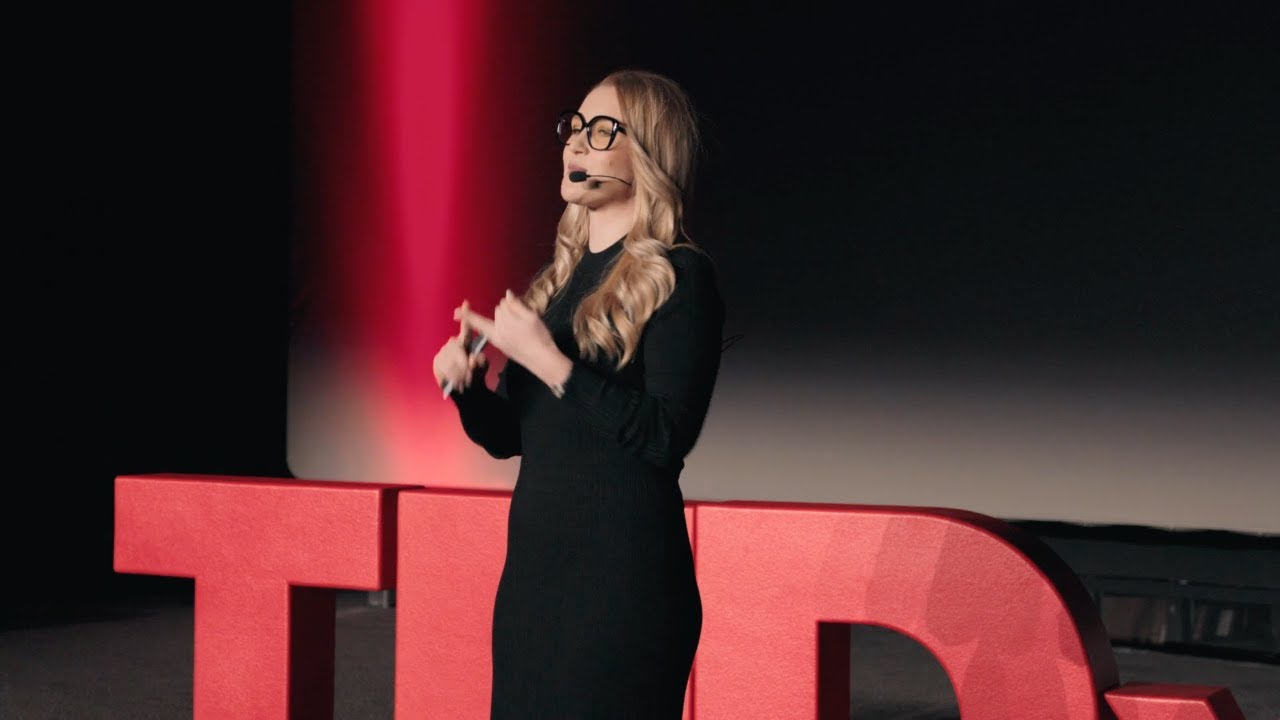
What do you want to be?
Anyone? You, over there — what do you want to be? You don’t need to answer out loud. But think about it for a moment.
Is it just me, or is this a very adult thing to ask? We walk around asking young people this question like it’s completely normal. How many of you have already been asked it? And how many of you were completely honest when you answered?
Because apparently, at 14 or 15, you’re supposed to know what you’ll be doing for the next 50 years. And if you don’t, there must be something wrong with you.
But listen carefully to that question. What do you want to be? Not when. Not for now. Not as a first step. Just be. As if it’s supposed to be permanent.
That question sounds innocent. But it carries a dangerous assumption — that you are already supposed to know. You don’t. And that’s what I want to talk about today. You don’t need to know who you are yet.
The World Your Grandparents Knew
Before I move on, think with me for a moment. Let’s go back in time and consider your great-grandparents’, your grandparents’, and your parents’ working lives. How many jobs did they have? One? Two? Not many.
In my family: my great-grandmother didn’t have a career at all — she was a stay-at-home mother, which is the equivalent of at least three full-time jobs, but that’s the subject of another talk. My grandmother had only one job for her entire life. My mother, until she was 55, also had only one job — and only then did she switch to something completely different.
Now, how about you? How many times do you think you’ll change jobs or careers in your lifetime?
Here’s what the data shows. Your great-grandparents had, on average, one to one-and-a-half jobs. Your grandparents had two to three. Your parents had four to five. But most people today — including your generation — are expected to change jobs or careers seven to eleven times in their lifetime.
Reinventing yourself at 30, 40, 50, or even later is no longer a sign that something went wrong. It’s the new normal. Yet you are being pushed to define yourself before you’ve even explored what’s possible. That’s not guidance. That’s pressure.
Questions Built for a World That No Longer Exists
Thirty, forty, fifty years ago, life didn’t just look different — it worked differently. People lived near where they were born. They worked near their home. They knew the rules early. Education led to one profession. That profession led to one employer. That employer led to one life.
This wasn’t because people were braver, more disciplined, or more figured out. It’s because the world rewarded certainty. If you stayed, you were safe. If you left, you were risky.
Today, the rules have flipped. The world no longer rewards staying still. It rewards moving, learning, adapting. Yet we keep asking you questions built for a world that no longer exists — questions built for straight lines in a world that now moves in curves.
The Comparison Trap
If you’re a student between 16 and 20 — or older — and you’ve ever felt stressed because family or society expects you to figure out your future, you’re not alone. Look around you. What you see is not personal failure. It’s a shared experience.
Before, comparison had limits. It happened in small groups, in classrooms, among people your age, in your own small world. Today, comparison has no boundaries. It’s everywhere. It’s online. It follows you home. It lives in your pocket. It shows up at night when you’re tired, alone, or bored.
If you’ve ever looked at someone online and felt that you were not good enough, not smart enough, not beautiful enough, not successful enough — or felt like you were already behind — you are not alone. That’s not insecurity. That’s being human in 2026.
Because what you’re really comparing isn’t success. You are comparing your raw, unedited life with someone else’s highlight reel. Their wins, their confidence, their best angles. You never see the drafts, the doubts, the days where they almost quit.
And while you are still growing, you are judging yourself as if the building phase should already be over.
Growth was never meant to be performed. It doesn’t happen in public. It doesn’t happen perfectly. It doesn’t happen in straight lines. Growth happens quietly, messily — most of the time painfully — in drafts no one applauds. And every person you admire, online or out in the world, was once in a chapter they will never post.
My Own Story
When I was little, I wanted to become a policewoman. Not because it sounded impressive, but because I wanted to protect people. A few years later, a life-threatening health condition closed that door for me. I didn’t just lose a dream. I lost a version of myself I thought I was supposed to become.
So I chose another dream. Doctor. Then lawyer. Every time I told myself: this is it — now I know. I never did.
And guess where I ended up? Finance. Corporate world, offices, deadlines, systems. Did I know what I was doing? No. Do I know now? Also no. Because what kept me moving was never certainty. It was curiosity.
Now, looking back, I see this clearly. Every turn, every doubt, every change brought me exactly where I needed to be — not only here on this stage today, but here in my life.
I want you to normalize this: identity is not something you decide once. It emerges while you move.
Certainty Is Fragile — Adaptability Is Not
In a fast-changing world, certainty is fragile. Adaptability is not. An identity was never meant to be chosen once. It’s shaped by what you try, what you fail at, what surprises you.
The people who thrive in this world are not those who knew everything early, or who know everything now. They are the ones who stayed open.
So if your life feels a bit messier right now, or you feel a little behind compared to your friends or classmates — that’s amazing. It means you’re still moving. And you’re still growing. And that is what matters.
Three Things to Take With You
Before I finish, one small exercise. If you’ve ever felt lost, scared, unsure, or a little behind — whether that was once, many times, or even right now — place your hand on your chest. Feel your heartbeat. Close your eyes. Take a deep breath.
You’re allowed to be here. What you’re feeling is not insecurity. It’s possibility. Make friends with that feeling. Trust it. Let it guide every step you take next.
And when the stress or fear takes over, you can come back to this.
Now, three small things I hope you carry with you:
First: replace pressure with curiosity. You don’t need a lifelong plan. You need your next honest step.
Second: stop comparing timelines. There is no universal schedule for becoming. Your pace is allowed to be yours.
Third: the next time someone asks you, “What do you want to be?” — try answering: “I’m really excited to find out.” Or: “I’m learning.” Or: “I’m exploring.” Or simply: “I’m trying.”
You are not behind. You are not broken. You are not lost. You don’t need to know who you are yet. You just need to keep becoming.
Thank you.